
15 December 2025
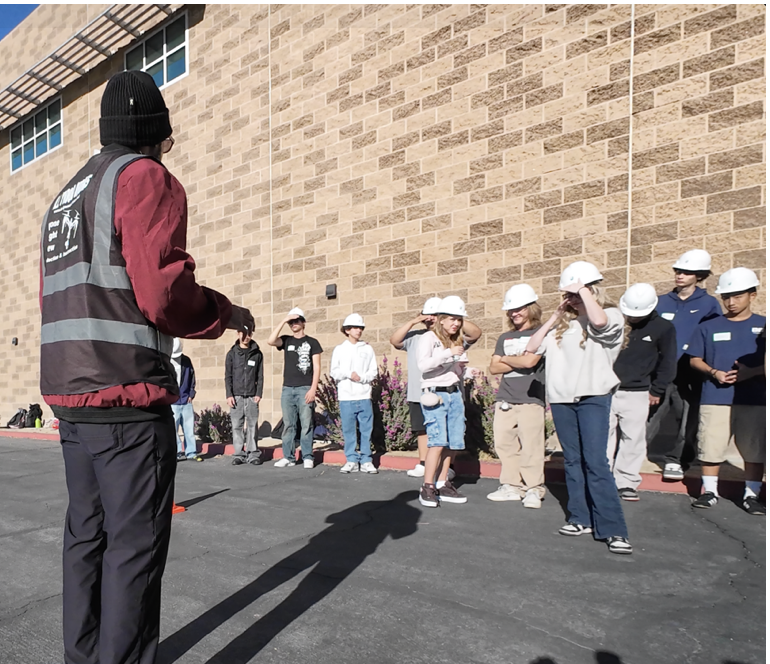
On December 9 and 11, I was invited to help teach a group of high school seniors from La Quinta High School in La Quinta, California.
It turned into an experience far more fulfilling than I expected. It was actually one of those rare opportunities that remind you exactly why you fell in love with drones in the first place.
Under the leadership of Skip Fredricks and the steady guidance of Rosann Denton—both drone cinematographers from Hollywood Drones in Palm Springs, California—I stepped into a classroom of curious, energetic young people who had never flown a drone before. They didn’t even know the terminology or the maneuvers. Some had never held a controller in their life.
But what they did have was curiosity.
And if you’ve been in the drone world long enough, you know that curiosity is the spark that pulls someone into this field for good. Watching that spark ignite in real time is something special.
Starting with the Basics
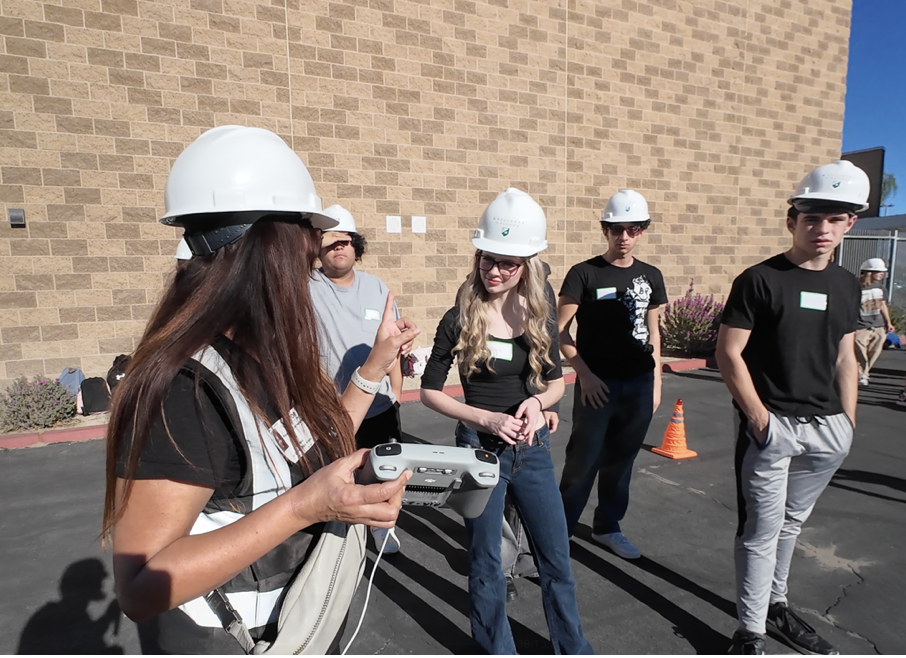
Before any propellers started spinning, each student completed their TRUST test—the FAA-required step for recreational flyers. We didn’t just hand them drones and say, “Have fun.” We walked them through what it actually means to fly responsibly.
From there, we covered drone safety, airspace awareness, and basic maintenance—the stuff most beginners skip, because they want to get straight to the good part. But these kids actually cared. They asked questions. They took notes. They weren’t just trying to fly—they wanted to understand why the rules exist and how to operate drones with confidence.
One student said something that stuck with me: “I didn’t know flying a drone involved all of this. It’s actually kind of serious.”
Exactly. And that level of respect is what keeps the skies safe.
The Five Maneuvers that Unlock Everything
Once we hit the field, the real fun began. I walked them through five simple but foundational drone maneuvers that build muscle memory and coordination:
- Rise Up
- Drop Down
- Dolly Forward
- Dolly Back
- Track Left/Right
When you teach beginners, you can always tell who’s going to pick it up quickly. Some were cautious. Some were adventurous. Some were quietly skilled. But without exception, all of them were locked in and focused.
Then came the challenge: a four-point square box formation, clockwise, using only the right stick.
This sounds simple, but it requires real control. You need to keep altitude steady, coordinate corners, and trust your movement. For students who had just learned to take off minutes earlier, this was quite a test.
One by one, they tried. One by one, they succeeded. Their confidence grew by the minute. You could see the shift from, “I hope I don’t crash” to "I’m actually getting this.”
Cinematic Movement and Drone Storytelling
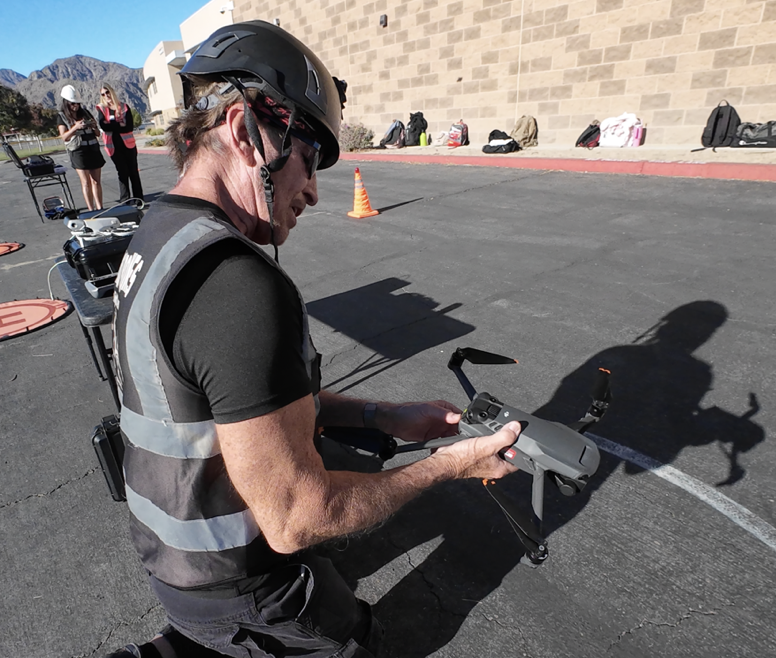
After we laid the foundation, Fredricks stepped in and delivered a short session on drone cinematography: How to move the camera with intention, how to think like a filmmaker, and how certain maneuvers translate into visual storytelling.
Instantly, the students’ flying changed. They weren’t just pushing sticks anymore, they were creating. They were trying arcs, reveals, pullbacks, and angles that showed they were starting to see drones as something more than toys.
It’s incredible how quickly creativity unlocks once the basics click. You give someone skill, then you give them imagination. And you get something powerful.
Tech That Lights Up a New Generation
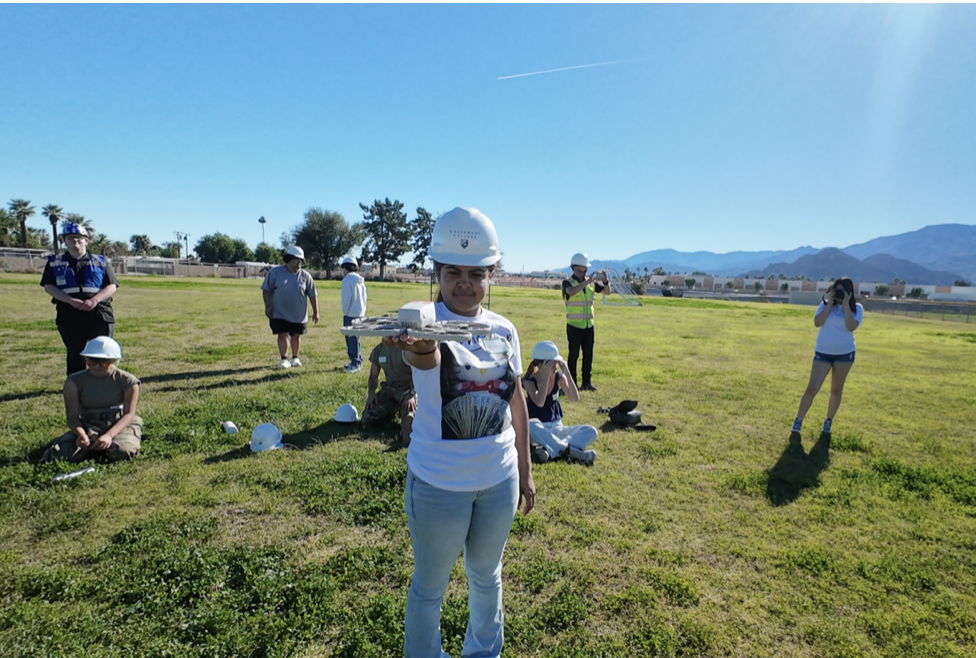
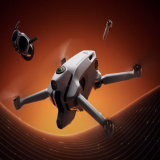
If you ever want to see teenagers get excited, hand them a drone with active tracking and gesture control. The DJI Flip and the Neo 2 stole the show. The active tracking modes had them laughing like they just discovered superpowers. The hand-gesture technology on the Neo 2 genuinely blew their minds.
Every new feature sparked questions: “Can it follow a bike? Can it track a person if they run? Can this shoot a music video? How far does gesture control work?”
This is the type of curiosity we need in the drone community. Not fear. Just excitement, discovery, and possibility.
The Drone Community Needs to Stop Gatekeeping
This experience also made me reflect on something I shared in a video I recorded during the training.
The drone community needs to reach a place where we become teachers, not gatekeepers. Too many people in the drone world guard knowledge like it’s a secret treasure. They hold onto skills, connections, and opportunities, instead of sharing them.
But here’s the truth...
If we want the drone industry to grow, we have to grow the people in it. If we want better pilots, we need more mentors. If we want innovation, we need fresh minds entering the space.
We need programmers, software engineers, design engineers, and drone repair specialists for consumer and enterprise drones. This is not just to help make better drones and advance drone technology, but also to educate and train others how to do the same, so the U.S. eventually becomes a manufacturing hub for innovation, technology, drone parts, repairs, software engineering, and so forth.
There are aspiring pilots everywhere: Young people, content creators, hobbyists, future professionals, and students who simply need someone to say, “Yeah, you can do this. Let me show you how.”
Knowledge isn’t currency. Knowledge is legacy. And legacy is something you build by giving away what you know.
How Are You Positioning Yourself for 2026?
The question I’ve been asking myself—and now I’m asking you—is simple: How are you positioning yourself in 2026 to mentor, educate, or inspire someone else?
Because drones aren’t slowing down. Technology isn’t slowing down. Opportunities aren’t slowing down.
But people will get left behind if we don’t step up and help them.
Mentorship doesn’t always come from a classroom:
• It can be answering questions in a Facebook group.• It can be showing your little cousin how to take off.
• It can be explaining camera settings to a new pilot at the park.
• It can be posting educational content online.
• It can be volunteering at a local school or youth center.
• It can be taking a beginner under your wing and helping them grow.
Small seeds turn into big trees. You don’t always know who you’re inspiring. You don’t always know whose life changes because you took five minutes to teach them something new.
My Mission
These last two days didn’t just teach the students something. They taught me something, too.
They reminded me why I created Inspire With Drones—to give back, to educate, and to open doors for people who might never have walked through them without a little encouragement.
There’s a quote I love that fits perfectly here: “A candle loses nothing by lighting another candle.”
That’s mentorship. That’s community. That’s the future of the drone world.
And if these high school students are any indication of what’s coming, we’re in good hands. The next generation is bright, curious, fearless, and ready for opportunities. They just need someone to hand them the controller.
Closing Thoughts
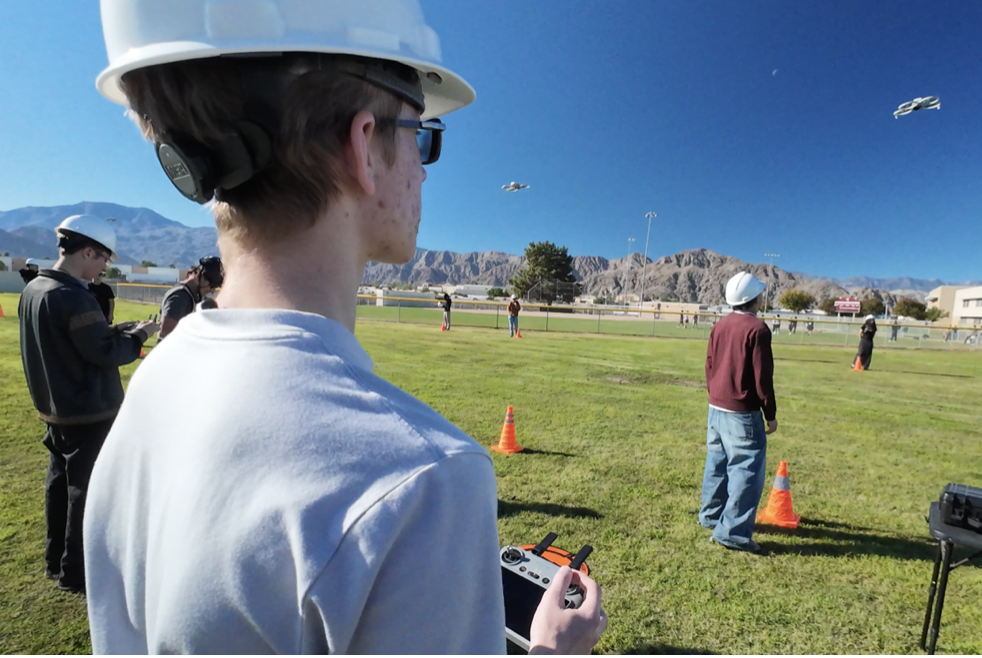
This experience was more than teaching basic maneuvers, showing off new drone tech, and watching first-time flyers take off with shaky hands and big smiles. It was a reminder that we all have something to give. We all have something we can teach. We all have the power to inspire.
So, here’s my challenge to you: Don’t gatekeep. Give back. Mentor someone. Teach someone. Encourage someone. The future of drone piloting depends on what we choose to share today.
And trust me—the next generation is ready to fly.