
06 January 2026
I didn’t begin my career with the intention of spending my days staring at telemetry data, watching propellers spin, or guiding a small aircraft through the sky with my thumbs. Becoming a drone pilot wasn’t a straight line—it was more like a series of unexpected turns, gut instincts, and one persistent fascination with seeing the world from above. Like most things that stick with you in life, I didn’t realize I was becoming a drone pilot until I’d already become one.
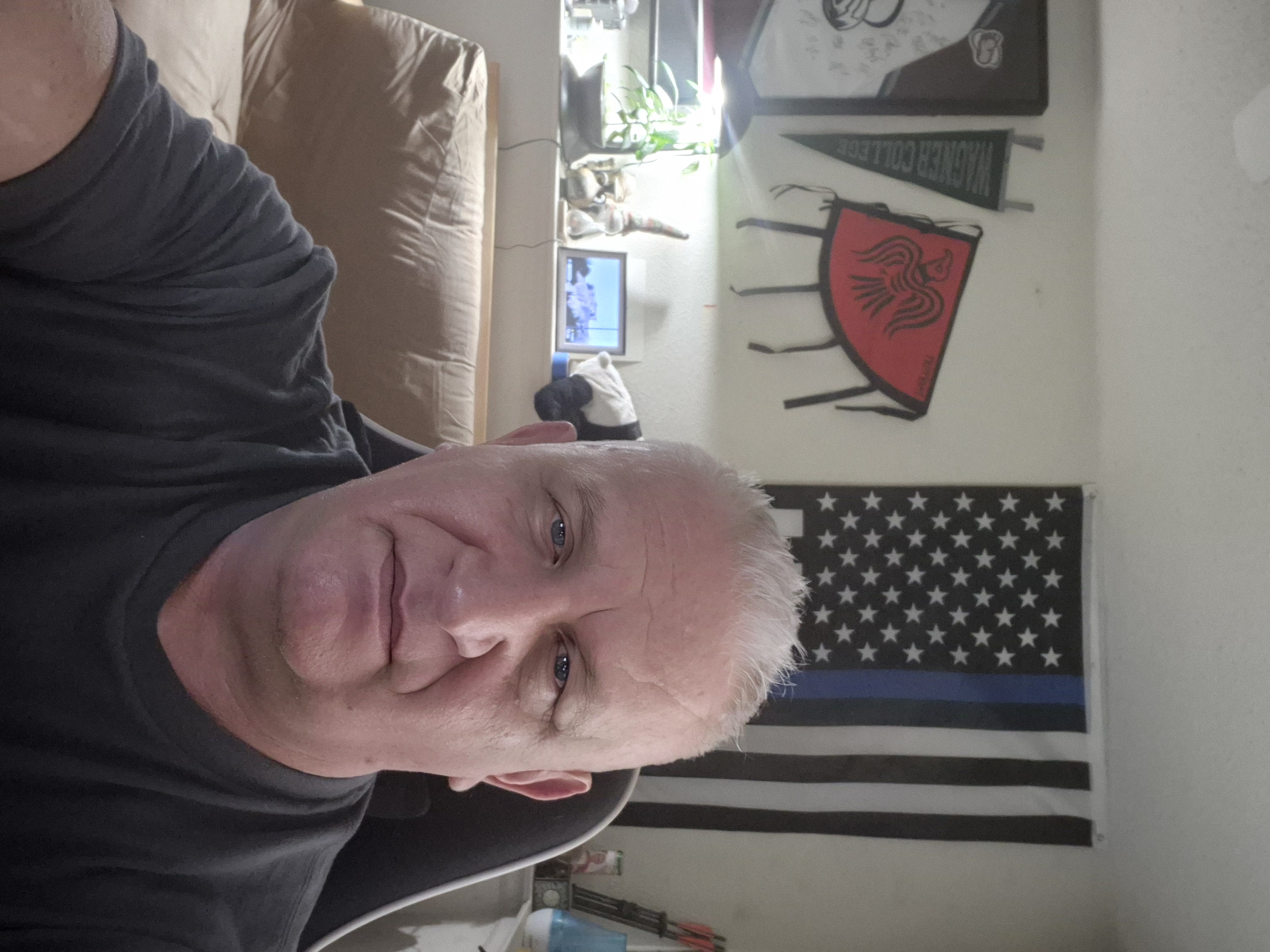
Thirty-two years ago, I became a police officer. I loved the fact that no two days are the same. Catching bad guys and all the other excitement that came with the job. My supervisors loved the way I did things, which meant they put me where they could get maximum performance from me: nights.
Unfortunately for them I wanted to see the sun again. I took the test and was promoted to detective. Pretty much doing the same things I had been doing, but during the day, in plain clothes. The only drawback was being “on-call” seven days a month. After a short time, my wife stopped even reaching for the phone after midnight because it was likely for me. Something would have happened and I needed to go to the PD, the jail, or the emergency room. It got worse once I joined SWAT. Joining meant additional call-outs.
Before drones were part of my daily vocabulary, I spent years working on the ground—literally and metaphorically. Police work required movement, observation, discipline, and a healthy respect for safety. I learned how to manage pressure, how to plan, how to stay calm when things didn’t go according to plan. Those skills didn’t scream “future drone pilot,” but later on, they’d become the backbone of my flying career.
My first encounter with a drone wasn’t elegant. A member of our SWAT team bought a drone. We used it at first as a novelty. Having it circle a building or location, checking an area before we went in, trying to look in windows. None of us at the time and any idea what the future of drones held for law enforcement. To us, it was a cool piece of equipment. Our chief at the time saw it as a tool that was valuable only in certain situations.
I ended up retiring from the PD after 27 years and went to work for our state Attorney General’s office as a Special Agent in the Medicaid Fraud unit. We were working remotely due to COVID, and I was desperate to get out of the house as much as possible.
I did what every rational adult would do in that situation. I bought my first drone.
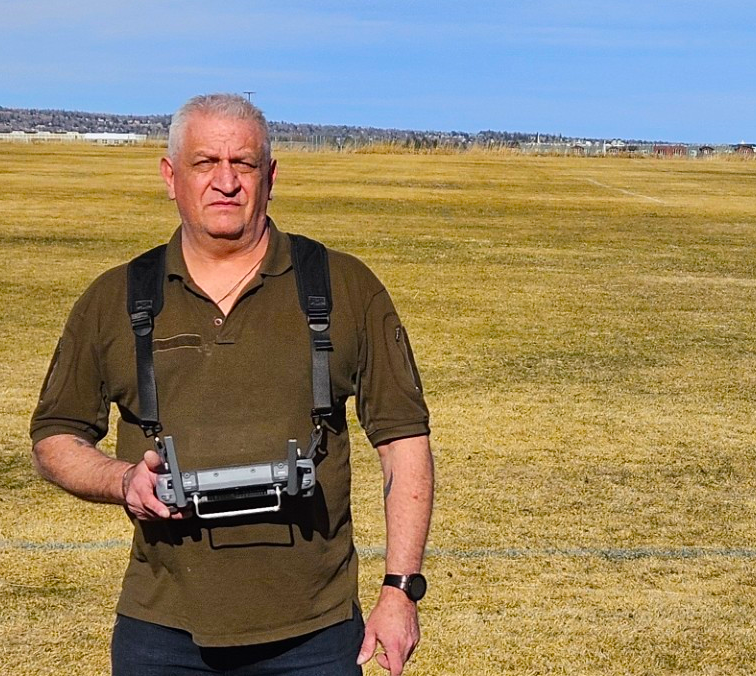
I’d like to say I took to it naturally, but the truth is my earliest flights were a mixture of awe and mild panic. Every time I pushed forward on the stick, I felt like I was piloting something both incredibly delicate and immensely powerful. I spent hours in open fields practicing basic maneuvers—hover, rotate, orbit, figure-eight patterns—long before I ever pointed a camera at anything worth recording. Something about the process hooked me. It wasn’t just flying. It was control, perspective, and creativity stitched together.
I had initially used this drone much the same way we did at the PD. People started asking if I could “bring the drone” for small projects—local events, outdoor group photos, odd jobs that needed a view from the sky. I thought of it as a somewhat expensive hobby. It cost me a couple hundred dollars, which isn’t cheap but by no means as expensive as the drone I have now. I just wanted to stay legal, safe, and polished while still being creative? Those early experiences sharpened my instincts and taught me how to see differently.
Eventually, I realized I needed to take things seriously if I wanted to transition from “guy with a drone” to “professional drone pilot.” That meant certifications, training, and a deeper dive into aviation knowledge. Getting my Part 107 remote pilot license was the turning point. Studying airspace classifications, weather patterns, risk assessments, safety procedures—it was like pulling back the curtain on an entirely new world. Suddenly, flying a drone wasn’t just about capturing cool shots. It was about understanding responsibility, becoming part of a structured aviation ecosystem, and respecting the rules that kept the skies safe.
Passing the exam wasn’t the end, it was the beginning. With certification came opportunities—and expectations. That also means continuing education. Since getting my certification, I’ve taken photography and aerial photography classes. Small business classes too. People trusted me with more significant projects. I started taking on work that required advanced planning, precise execution, and sometimes nerves of steel. Commercial filming. Inspection flights where a single mistake could cost thousands of dollars. I learned how to fly in wind, in tight spaces, over water, around structures, and occasionally in situations where improvisation was the only way forward. Every job taught me something new—about drones, about myself, and about the sky.
One of the unexpected side effects of becoming a drone pilot was learning to see the world like a mapmaker, an architect, and an artist all at once. When you fly regularly, you stop viewing landscapes horizontally. You start thinking about heights, lines, symmetry, terrain, and geometry. You eye power lines suspiciously, waiting for them to reach out and snag your drone. A patch of empty field becomes a canvas for flight. A building becomes a puzzle of edges and angles. Flying rewired my brain in a way I didn’t expect.
As technology advanced, so did my passion. Every new generation of drones brought better sensors, smarter navigation, and more possibilities. I embraced each evolution, learning to master manual flight while also understanding how to work with intelligent features and automated systems. The more capable the drones became, the more I felt responsible for pushing myself to become equally skilled. A drone is only as good as the pilot behind it—something I remind myself of every time I launch.
There’s a moment in every flight—somewhere between takeoff and landing—when everything goes quiet. You’re fully locked in. The world shrinks to the view on your screen and the instinct in your hands. It’s focus and freedom at the same time. That’s the part that keeps me flying.
Today, being a drone pilot is more than a job for me. It’s a craft. A discipline. A way of seeing and understanding the world. It’s problem-solving in real time, creativity under pressure, and the constant pursuit of better shots, safer flights, smoother movements, and sharper skills.
When people ask how I became a drone pilot, I tell them it wasn’t a single decision. It was a series of steps driven by curiosity, patience, and the thrill of perspective. It was learning from mistakes, chasing improvement, and staying fascinated with the sky. What started as fascination turned into a hobby. The hobby became a discipline. The discipline became a profession.
And the profession? It’s still evolving—just like the technology, just like the world, and just like me. Every flight teaches me something new. Every project opens a new door. Every takeoff reminds me why I started: I wanted to see the world differently.
And now, I get to help others see it that way too.
Check Out Matt's Work